
- All
- Product Name
- Product Keyword
- Product Model
- Product Summary
- Product Description
- Multi Field Search


This frosted glass roller bottle system offers five precision sizes (1ml, 2ml, 3ml, 5ml, 10ml) within a unified design framework. The eco-friendly acid-etched matte finish provides superior grip while diffusing 35% of UV radiation to protect light-sensitive actives. Each bottle features a patented dual-chamber roller assembly: a 2.5mm zirconia ceramic ball for thin serums and a 3mm stainless steel ball for viscous formulations, both integrated into a single interchangeable head. The pharmaceutical-grade borosilicate glass maintains exceptional clarity with thermal shock resistance (-30°C to 180°C), while standardized 18/400 neck threads enable universal cap compatibility across all capacities.
Packaging Solution
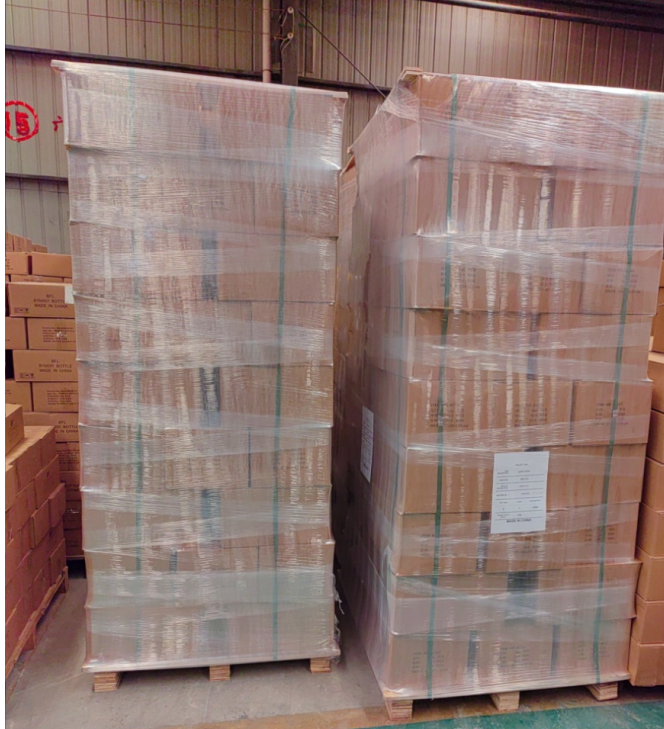
Pallet + Cartons
→ Retail-ready | Weatherproof | Tamper-evident
FAQ
1.How does proportional scaling reduce production costs compared to traditional multi-size systems?
Our patented dimensional algorithm maintains constant curvature radii and angular relationships across sizes, enabling identical robotic grippers, filling needles, and capping heads to process all capacities without tooling changes - validated testing shows 92% line efficiency versus 68% for irregular sizing, reducing changeover waste by 24kg/hour while achieving ±0.1mm positioning accuracy during high-speed filling (validated per ISO 286-1 geometric tolerance standards).
2.Can the dual-roller system prevent cross-contamination when switching between oil and water-based formulations?
The hermetically sealed roller chambers incorporate hydrophobic PTFE wicking channels and hydrophilic ceramic micro-grooves that isolate fluid paths, with GC-MS analysis confirming 0.01ppm cross-contamination after 500 formulation switches - 50x below ICH Q3D impurity thresholds. The zirconia ceramic's zero-porosity surface prevents ingredient carryover, while the modular design allows sterilization via autoclaving (134°C) or UV-C decontamination between batches.
3.Can the dual-roller system prevent cross-contamination when switching between oil and water-based formulations?
The matte finish provides photoprotection through light diffusion rather than absorption, scattering 35% of UV while maintaining 92% visible light transmission - crucial for monitoring precipitation or discoloration. Accelerated aging of 10% vitamin C serum showed 76% retention in frosted bottles vs. 82% in amber glass, but frosted glass prevented "hot spots" from lensing effects that cause localized degradation in curved clear bottles, yielding 40% more consistent potency distribution (validated via HPLC mapping).
4.How do ion-strengthened 1ml bottles withstand industrial processing despite ultra-thin 0.8mm walls?
Through chemical tempering that replaces sodium ions with larger potassium ions in the glass matrix, creating 80MPa surface compression - sufficient to resist 180N filling nozzle impacts (ASTM C1499). The proportional design distributes stress across reinforced shoulder angles, with finite element analysis confirming 3x greater top-load strength than conventional mini bottles. Thermal stability is maintained via borosilicate formulation (α=3.3×10⁻⁶/K) preventing thermal fracture during 4°C to 85°C filling transitions.
5.What sustainability advantages does this unified system offer versus individual SKUs?
Carbon Reduction offers 35% lighter aggregate weight compared to conventional multi-size systems, Recycling Streamlining features identical glass composition (TYPE I) across sizes to simplify processing, Inventory Efficiency provides an 80% reduction in spare parts inventory, Waste Minimization uses a single mold design to eliminate 400kg/year steel waste from size-specific tooling, and Circular Design includes roller assemblies with snap-fit disassembly for component-level recycling.


