- All
- Product Name
- Product Keyword
- Product Model
- Product Summary
- Product Description
- Multi Field Search

Views: 0 Author: Site Editor Publish Time: 2026-05-18 Origin: Site


The selection of a wine bottle transcends mere functionality, representing a complex interplay of material science, industrial design, brand identity, and consumer psychology. This analysis provides a comprehensive framework for brands navigating the procurement of bottles of wine in the 2026 global market. It systematically examines nine pivotal factors that shape this decision-making process. The investigation begins with the semiotics of bottle morphology, exploring how traditional shapes like Bordeaux and Burgundy convey regional heritage while innovative designs articulate modern brand narratives. It proceeds to an examination of glass composition, color, and weight, evaluating their dual roles in wine preservation and the communication of premium value. The discourse extends to the pressing concerns of sustainability, analyzing the roles of recycled content, lightweighting, and circular economic models. Further consideration is given to closure systems, customization techniques, supply chain logistics, and the intricate web of international regulatory standards. The objective is to equip brand owners with a deep, nuanced understanding, enabling them to choose packaging that not only protects the product but also functions as a powerful instrument of market differentiation and consumer engagement.
Bottle shape communicates a wine's origin, style, and brand identity.
Glass color and weight influence both wine preservation and perceived quality.
Sustainable practices like lightweighting are now key consumer expectations.
Customization transforms a simple container into a unique brand statement.
Choosing the right closure type is vital for product integrity and user experience.
Understanding MOQs helps align production with your business scale.
Selecting the right bottles of wine is a strategic marketing decision.
3. The Green Imperative: Sustainability in Glass Packaging for 2026
4. The Seal of Quality: Closures and Their Symbiotic Relationship with the Bottle
5. The Art of the Individual: Customization and Decoration Techniques
6. The Logic of Production: Navigating Manufacturing and Supply Chain
7. The Psychology of the Shelf: How Bottles Influence Buying Decisions
8. The Regulatory Landscape: Compliance and Standards in Global Markets
9. The Future of the Bottle: Innovations and Trends to Watch
A bottle of wine is never just a container. It is the first handshake with the consumer, a silent narrator of the liquid story held within. Its form is a language, developed over centuries, that speaks of region, grape varietal, tradition, and aspiration. When a consumer reaches for a bottle on a crowded shelf, they are often responding to a set of deeply ingrained visual cues. To understand these forms is to understand a fundamental aspect of the wine world's grammar. The choice a brand makes in this regard is not a trivial aesthetic decision; it is a declaration of identity. Does the brand align with centuries of tradition, or does it seek to disrupt the established order with a bold new silhouette? Let us explore the primary archetypes of wine bottle shapes and the meanings they convey.
The world of wine packaging is dominated by a few iconic shapes, each with a history tied to a specific European region. These forms have become global standards, creating an immediate sense of recognition for consumers.
The Bordeaux bottle is perhaps the most recognizable. Characterized by its straight sides, tall stature, and distinctively high, sharp shoulders, its design is one of purpose. The high shoulders were originally conceived to trap sediment during pouring, a practical feature for the heavily structured, age-worthy red wines of its namesake region, such as Cabernet Sauvignon and Merlot. Today, seeing this shape immediately suggests a full-bodied, structured wine, whether it comes from France, California, or Chile. Its assertive, architectural lines project a sense of confidence and gravitas.
In contrast, the Burgundy bottle presents a more organic, flowing form. Its wider base tapers gently into sloped, almost non-existent shoulders. This design is historically associated with the more delicate Pinot Noir and Chardonnay grapes of the Burgundy region. The shape is less about function—these wines typically have less sediment—and more about a feeling. Its softer, more feminine curves evoke a sense of elegance, subtlety, and grace. A winemaker choosing a Burgundy-style bottle is often signaling that the wine inside is more about nuanced aromatics and texture than raw power.
The third classic form is the Alsace/Mosel bottle, also known as the Hock bottle. Tall, slender, and delicate, it is even more elongated than its counterparts and lacks a significant punt (the indentation at the base). This shape originated in the German Mosel and French Alsace regions, areas known for aromatic white wines like Riesling and Gewürztraminer. Its slim profile was practical for packing and shipping on river barges along the Rhine. For the modern consumer, this elegant, flute-like bottle signals a wine that is likely to be crisp, aromatic, and unoaked.
| Bottle Type | Key Characteristics | Shoulder Style | Associated Grape Varietals |
|---|---|---|---|
| Bordeaux | Straight sides, tall | High, pronounced | Cabernet Sauvignon, Merlot, Sauvignon Blanc |
| Burgundy | Wider base, sloped sides | Gentle, sloping | Pinot Noir, Chardonnay |
| Alsace/Mosel | Tall, slender, thin | None | Riesling, Gewürztraminer, Pinot Blanc |
The bottle for sparkling wine is a marvel of material engineering, designed not just for aesthetics but for safety. The internal pressure inside a bottle of Champagne can reach up to 90 psi (pounds per square inch), which is two to three times the pressure in a typical car tire. To contain this force, sparkling wine bottles are fundamentally different from their still-wine counterparts.
They are made with heavier, thicker glass to withstand the constant pressure. They feature a deep punt, which is not for a sommelier's thumb, but is a crucial structural element. Much like an architectural arch, the deep indentation increases the surface area at the base and distributes the pressure more evenly across the structure, significantly strengthening the bottle and preventing it from exploding. The neck is also specifically designed with a prominent lip, or annulus, to securely hold the cork and wire cage (muselet) in place. The shape, while reminiscent of a Burgundy bottle, is a product of necessity, a vessel engineered for containment. Choosing such a bottle is an unavoidable requirement for any producer of methode champenoise wines, instantly communicating the celebratory, effervescent nature of the product.
While tradition holds a powerful sway, the 2026 market is also characterized by a growing desire for differentiation. New-world wineries and innovative brands are increasingly breaking away from the classic triumvirate of shapes to create packaging that is uniquely their own. This can involve subtle modifications, such as an exaggerated taper or an unusually deep punt, or it can mean commissioning a completely proprietary mold.
Consider a square-shouldered bottle for a bold, modern rosé, or a short, stout bottle for a rustic, unfiltered field blend. These unconventional choices are a gamble. They forsake the immediate recognition of a classic shape for the chance to create a powerful, memorable brand identity. For a spirit brand, a unique silhouette for their can become a signature element, as recognizable as the label itself. The risk is that the consumer may not know how to "read" the bottle, but the reward is a product that is impossible to ignore on the shelf. The decision to pursue a custom shape requires a deep understanding of the target audience and a clear brand strategy. It is a statement that the wine—or spirit—inside is as unique as the vessel that holds it.
The shape of a wine bottle has a profound, if often subconscious, effect on how consumers perceive the product. A heavy bottle with a deep punt is often associated with higher quality and a higher price point, a psychological shortcut that brands have long leveraged (Piqueras-Fiszman & Spence, 2012). The sleek, minimalist lines of an Alsace flute can suggest modernity and freshness, while the classic Bordeaux shape can imply heritage and reliability.
Beyond psychology, there are practical considerations. How does the bottle fit in a standard wine rack or a refrigerator door? How easy is it for a server to handle and pour? An unusually wide or tall bottle might stand out on the shelf, but it can create logistical headaches for retailers and restaurateurs. The weight of the bottle affects shipping costs and the brand’s overall carbon footprint. The choice of shape is therefore a balancing act between creating a strong aesthetic statement, managing consumer perceptions, and addressing the practical realities of storage, transport, and service. It is a multidimensional problem that requires a holistic approach, weighing the narrative power of the form against its real-world implications.
If the shape of a bottle is its skeleton, the glass itself is its skin and substance. The material quality, color, and weight of the bottle are not passive attributes; they are active participants in the life of the wine. They protect it from its enemies, primarily oxygen and ultraviolet light, while also communicating a wealth of information to the consumer. A deep inquiry into the nature of glass reveals how this seemingly simple material is, in fact, a sophisticated technology that stands at the intersection of chemistry, physics, and marketing.
Glass is a fascinating material, an amorphous solid that, on a molecular level, behaves more like a liquid frozen in time. The primary component of nearly all commercial glass, including bottles of wine, is silica, derived from sand. However, silica has a very high melting point (around 2,000°C or 3,632°F), making it difficult and expensive to work with on its own.
To make the process viable, manufacturers introduce a fluxing agent, typically soda ash (sodium carbonate). The soda ash lowers the melting point to a more manageable 1,000°C. However, the addition of soda ash makes the resulting glass water-soluble, which is clearly not ideal for a beverage container. To counteract this, a stabilizer is added, most commonly limestone (calcium carbonate). These three ingredients—silica, soda ash, and limestone—form the basis of what is known as soda-lime glass, which accounts for over 90% of all glass manufactured today.
The process involves melting these raw materials at extreme temperatures in a furnace. The molten glass is then guided into a forehearth, where it is cooled to a uniform temperature before being cut into precise "gobs." Each gob is then fed into a molding machine, which, in a two-step process (first in a blank mold, then in a finishing mold), blows and shapes the gob into the final bottle form. The newly formed bottles then travel through a long oven called an annealing lehr, where they are slowly cooled to relieve internal stresses. This controlled cooling is what gives the final product its strength and durability.
The color of a wine bottle is one of its most important functional attributes. Wine is a delicate, living product, and its greatest enemy after it has been bottled is ultraviolet (UV) light. UV radiation can trigger chemical reactions in the wine, creating "light-struck" faults that produce unpleasant aromas of cooked cabbage or wet wool.
This is where color comes in. The color of the glass is determined by adding various metal oxides to the molten mixture.
Antique Green: The traditional color for many red wines, especially from Bordeaux, is created by adding iron, chromium, and copper. It offers excellent protection from UV light, filtering out a significant portion of the harmful spectrum.
Amber/Brown: Produced by adding iron, sulfur, and carbon, amber glass provides the highest level of UV protection. This is why it is the standard color for beer bottles, as the hops in beer are particularly susceptible to light-strike. It is also a common choice for certain styles of wine, like some Sherries or Ports.
Flint/Clear: Clear glass, known in the industry as "flint" glass, is made from raw materials with very low iron content. While it offers the least UV protection, it has the significant marketing advantage of showcasing the wine's color. It is the preferred choice for most rosé wines, where the pale pink or salmon hue is a key selling point, as well as for many white wines like Sauvignon Blanc, where a pale, watery-green tint is considered desirable. For wines intended for quick consumption, the risk of light-strike is lower, making flint a viable option.
The choice of color is therefore a critical balance between the need for product protection and the desire for market appeal. For a wine meant to age, darker glass is almost always the superior choice. For a vibrant rosé meant to be enjoyed young, the visual appeal of clear glass may outweigh the risks.
In the premium and super-premium sectors, particularly for spirits like vodka, gin, and high-end tequila, a special type of glass known as "super flint" or "extra flint" has become the gold standard. Super flint glass is made from raw materials with an exceptionally low iron oxide content, resulting in a vessel of remarkable clarity and brilliance. This crystal-clear appearance conveys a sense of purity, quality, and luxury.
The production of super flint glass is more demanding. It requires higher quality raw materials, and the manufacturing process must be meticulously controlled to avoid any impurities that could mar its clarity. The result is a bottle that acts like a lens, enhancing the visual appeal of the liquid inside. For a premium vodka, the icy clarity of a super flint bottle reinforces the brand's message of purity. For a craft gin infused with botanicals, it allows the subtle coloration and clarity of the spirit to shine through. While less common for wine, some ultra-premium white wines or rosés may use super flint glass to create a powerful statement of luxury on the shelf. This material choice is a direct investment in the perceived value of the product.
For decades, a simple equation has dominated the wine and spirits market: heavy bottle equals expensive, high-quality product. The tactile experience of picking up a weighty, substantial bottle creates a powerful, subconscious association with value and craftsmanship. Brands have leaned into this, using increasingly heavy bottles with deep punts and thick glass walls as a signifier of their top-tier offerings.
However, in 2026, this trend is facing significant headwinds. The environmental cost of producing and shipping heavy glass bottles is substantial. A heavier bottle requires more raw materials, more energy to melt, and more fuel to transport. As both consumers and regulatory bodies become more focused on sustainability, the "premium-ness" of a heavy bottle is being called into question. Is it a mark of quality, or a symbol of wastefulness?
This has led to a vigorous debate within the industry. Some argue that the psychological benefit is too powerful to ignore, while others contend that true luxury now lies in intelligent, sustainable design. The result is a move toward a more nuanced approach. Brands are exploring ways to create a perception of quality without excessive weight, perhaps through unique shapes, sophisticated decoration, or the use of high-clarity glass. The future likely lies not in abandoning glass, but in optimizing it—creating bottles that feel substantial and look beautiful without carrying an unsustainable environmental burden. This is a central challenge for brands and manufacturers alike: how to reconcile the psychology of weight with the ethics of waste.
The conversation around packaging has shifted dramatically. What was once a secondary consideration has moved to the forefront of brand strategy and consumer consciousness. In 2026, a brand's commitment to sustainability is not an optional extra; it is a core component of its value proposition. Glass, with its infinite recyclability, is inherently well-positioned in this new paradigm. However, simply using glass is no longer enough. Brands are now expected to demonstrate a deeper commitment to environmental stewardship through choices regarding recycled content, bottle weight, and participation in a circular economy.
Glass is a uniquely sustainable material because it can be recycled endlessly without any loss of quality or purity. A recycled glass bottle can be melted down and reformed into a new bottle over and over again. The use of recycled glass, known as post-consumer recycled (PCR) content or "cullet," in the manufacturing process has significant environmental benefits.
For every 10% of cullet used in a batch, the energy required to melt the glass decreases by about 3% (Glass Packaging Institute, n.d.). This is because cullet melts at a lower temperature than raw materials. Using recycled glass also reduces the need for quarrying new sand, soda ash, and limestone, preserving natural resources and landscapes. It significantly lowers greenhouse gas emissions, with every ton of recycled glass saving over a ton of raw materials and reducing CO2 emissions.
A common concern among brand owners is whether using PCR content will compromise the quality or appearance of their bottles. For colored glass, such as antique green or amber, high percentages of PCR content are easily integrated with no discernible impact on the final product's appearance or structural integrity. The challenge is greater for flint (clear) glass. Sourcing high-quality, color-sorted clear cullet is more difficult, and impurities can sometimes lead to a slight tint or reduced brilliance. However, advancements in sorting technology and glass manufacturing have made it possible to produce high-clarity flint bottles with substantial levels of recycled content. Leading manufacturers are now able to offer super flint-quality bottles with significant PCR percentages, effectively debunking the myth that sustainability must come at the expense of luxury aesthetics.
The "heavy bottle" trend, as discussed earlier, is in direct conflict with sustainability goals. The practice of "lightweighting"—redesigning a glass bottle to use less glass without compromising its performance—is a key strategy for reducing the environmental impact of wine and spirits packaging.
The benefits of lightweighting are twofold. First, it reduces the amount of raw materials and energy needed for production. Second, and perhaps more significantly, it reduces the weight of the final product, which translates directly into lower transportation-related carbon emissions throughout the supply chain. A 10% reduction in bottle weight can lead to a substantial decrease in fuel consumption when shipping millions of units around the world.
The process of lightweighting is a sophisticated engineering challenge. Manufacturers use advanced computer modeling techniques, such as Finite Element Analysis (FEA), to analyze stress points on a bottle's design. This allows them to strategically remove glass from low-stress areas while maintaining or even reinforcing high-stress areas like the neck and base. The goal is to achieve the optimal balance of material efficiency, structural integrity, and aesthetic appeal. A successful lightweighted bottle maintains its premium feel and durability while carrying a much smaller environmental footprint. For many brands, communicating this intelligent design to consumers is becoming a more powerful story than simply relying on brute weight.
While recycling is a cornerstone of glass sustainability, the concept of a circular economy pushes the idea even further. Beyond single-use recycling, some regions and brands are exploring bottle reuse and refill systems. In this model, consumers return empty bottles to a collection point. The bottles are then professionally washed, sanitized, and inspected before being refilled by the producer.
This model offers even greater environmental benefits than recycling, as it eliminates the energy-intensive melting process altogether. A single glass bottle can be reused 20 to 50 times before it becomes too scuffed and is sent for recycling. Historically, this was the standard model for many beverage containers, from milk to soda.
In 2026, we are seeing a resurgence of interest in these systems, particularly at a local or regional level. Wineries, breweries, and beverage companies are partnering with third-party logistics firms to create the infrastructure for collection and washing. The challenges are significant, involving standardized bottle shapes to streamline the process, robust tracking systems, and a shift in consumer behavior. However, for brands with a strong local following or a deeply committed environmental ethos, offering a refillable option can create an incredibly powerful bond with their community. It transforms the bottle from a disposable item into a durable, returnable asset, the ultimate expression of a circular economy.
A brand's sustainability efforts are only effective if they are communicated to the consumer. The bottle itself can be a medium for this message. This can be done explicitly, through on-label icons or text indicating the percentage of recycled content or the bottle's lighter weight. A QR code on the label could link to a webpage detailing the brand's full environmental policy, from vineyard practices to packaging choices.
The communication can also be more subtle. A brand might choose a natural, uncoated paper for its label, use a cork closure from a sustainably managed forest, and select a standard-shaped, lightweighted bottle. The entire package works in concert to convey a message of thoughtful, responsible craftsmanship. In a market where consumers are increasingly skeptical of "greenwashing," authentic, tangible choices in packaging can speak louder than marketing slogans. The decision to invest in sustainable packaging is not just an ethical one; it is a strategic one that builds trust and resonates with the values of the modern consumer.
The closure is the bottle's essential partner, the gatekeeper that protects the liquid inside from its primary enemy, oxygen, while also playing a crucial role in the consumer's experience of opening and resealing the product. The choice of closure is far from simple, involving a complex web of considerations including the wine's intended aging potential, cost, consumer perception, and sustainability. The neck finish of the bottle must be perfectly matched to the closure type, making this a decision that must be made in concert with the bottle selection itself.
For centuries, natural cork has been the undisputed king of wine closures. Harvested from the bark of the cork oak tree (Quercus suber), it is a remarkable natural material. Its unique cellular structure, composed of millions of air-filled cells, makes it elastic, compressible, and impermeable to liquids but very slightly permeable to gases. This tiny, slow ingress of oxygen is believed to be essential for the complex aging process of fine wines, allowing them to evolve and develop secondary and tertiary aromas over years or even decades.
However, natural cork is not without its problems. The primary issue is the risk of "cork taint," a musty, unpleasant aroma caused by the chemical compound 2,4,6-trichloroanisole (TCA). While incidence has been drastically reduced through improved quality control, the risk still exists. This, along with variability in performance, led to the development of alternative closures.
Technical corks are an attempt to combine the benefits of natural cork with greater consistency. They are typically made from granulated cork particles bonded together, often with a disc of natural cork at each end. They offer a reliable seal at a lower cost than high-grade natural cork and have a very low risk of TCA taint.
Synthetic corks, made from plant-based polymers or petroleum-based plastics, offer complete neutrality and predictability. They create a tight seal, are TCA-free, and can be produced with varying levels of oxygen permeability to mimic the aging properties of natural cork. Early generations of synthetic corks were criticized for being difficult to extract and for potential flavor-scalping, but modern versions have improved significantly.
Once relegated to inexpensive, low-quality wines, the screw cap, or Stelvin closure, has undergone a dramatic reappraisal. Developed in the 1960s, this aluminum cap with a neutral liner provides a perfect, airtight seal, completely eliminating the risk of TCA taint and ensuring that the wine arrives to the consumer exactly as the winemaker intended.
In countries like Australia and New Zealand, screw caps are now the dominant closure for almost all styles of wine, including premium reds. Winemakers there champion their consistency and ability to preserve the fresh, vibrant fruit characteristics of their wines, particularly aromatic whites like Sauvignon Blanc. The stigma against screw caps has slowly eroded in North America and Europe, though some resistance remains in traditionalist circles.
The choice between cork and screw cap often comes down to the winemaker's philosophy and the wine's intended style. For a crisp white wine meant for early consumption, the screw cap's ability to lock in freshness is a clear advantage. For a collectible red wine intended for long-term cellaring, many still prefer the romantic tradition and proven track record of natural cork. The debate is no longer about quality, but about style, intention, and audience expectation.
| Closure Type | Primary Material | Aging Potential | Key Advantage | Key Disadvantage |
|---|---|---|---|---|
| Natural Cork | Bark of Quercus suber | Excellent for long-term | Tradition, slow oxygen ingress | Risk of TCA, variability |
| Technical Cork | Agglomerated cork particles | Good for mid-term | Consistency, low TCA risk | Less romantic than natural |
| Screw Cap | Aluminum with liner | Excellent for preserving freshness | No TCA, perfect seal, convenience | Lacks tradition, perceived as 'cheap' by some |
| Glass Stopper | Glass with polymer seal | Excellent for preserving freshness | Elegant, reusable, neutral | Higher cost, requires specific bottle neck |
Beyond the main two contenders, a variety of other closures serve niche markets. The swing-top (or Grolsch-style) closure, with its wire-bail and rubber gasket, provides an excellent, reusable seal. While most commonly associated with and artisanal beverages, it can lend a rustic, homespun feel to certain wines or ciders.
A more modern innovation is the Vinolok, also known as a glass stopper. This elegant, all-glass closure fits into a specially designed bottle neck and is held in place by a clear, inert o-ring. It provides a clean, reliable seal, is completely neutral, and offers a high-end, premium aesthetic. The stopper is reusable, and the opening experience is simple and satisfying. While more expensive than corks or screw caps, Vinoloks are a compelling option for brands looking to create a unique and luxurious presentation, particularly for rosé and aromatic white wines.
The part of the bottle that engages with the closure is called the "neck finish." This is not a detail to be overlooked; it is a critical specification that ensures the integrity of the seal. Different closures require different neck finishes. A bottle intended for a natural cork will have a straight, smooth inner bore. A bottle designed for a screw cap will have molded external threads, known as a BVS or BVP finish. A bottle meant for a Vinolok requires a precisely engineered internal shape to accommodate the glass stopper.
When ordering bottles of wine, it is absolutely imperative that the neck finish specification is correctly matched to the intended closure. A mismatch can lead to catastrophic failure: leaking bottles, premature oxidation, or closures that are impossible to apply or remove. Reputable glass manufacturers work closely with clients to ensure this compatibility, offering a range of standard neck finishes and providing detailed technical drawings. For any brand, confirming these specifications with both the bottle supplier and the closure supplier is a non-negotiable step in the quality assurance process.
In a saturated marketplace, the ability to stand out is paramount. While shape and color provide the foundation, it is the final layer of decoration and customization that truly brings a brand's personality to life. These techniques transform a stock bottle into a bespoke piece of packaging, a tactile and visual representation of the brand's story. From subtle embossing to vibrant, full-bottle printing, the options available in 2026 allow for an unprecedented level of creative expression.
For brands seeking the ultimate form of differentiation, a proprietary or custom mold is the pinnacle of packaging design. This process involves creating a unique bottle shape that belongs exclusively to the brand. It is an investment, but one that can pay enormous dividends in brand recognition and equity.
The journey begins with a concept. This could be a simple sketch, a 3D rendering, or even just a descriptive idea. The brand then works with the glass manufacturer's design and engineering team to translate this concept into a technical reality. Using computer-aided design (CAD) software, the team creates detailed 2D and 3D models of the proposed bottle. These models allow for precise adjustments to capacity, weight, and structural integrity before any physical molds are made.
Once the digital design is approved, a pilot mold is created. This allows for the production of a small number of sample bottles. These samples are crucial for final evaluation. The brand can see and feel the bottle, test it on their bottling line, and conduct consumer research. Based on this feedback, final tweaks can be made. Only after the sample is formally approved does the manufacturer proceed with creating the final production molds. These molds, made from high-grade cast iron or bronze, are precision-engineered to produce millions of identical bottles over their lifespan. The initial mold development fee can range from a few thousand to tens of thousands of dollars, but it grants the brand a powerful and exclusive piece of intellectual property (Xilong Packaging, 2026).
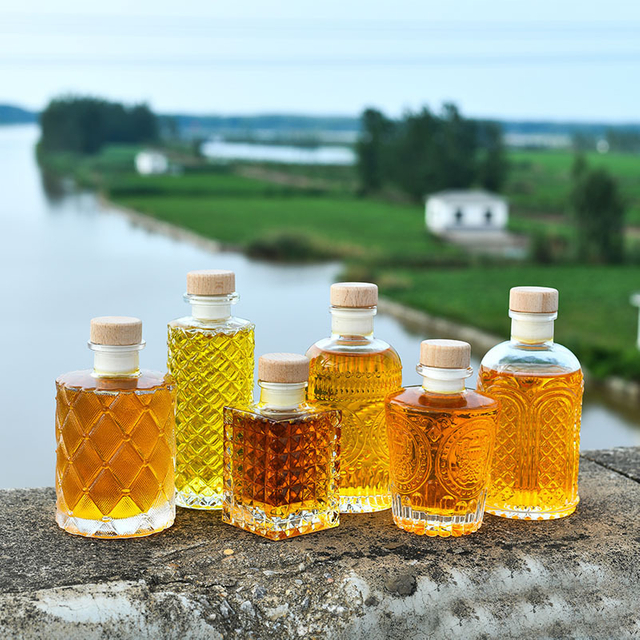
Beyond shape, the surface texture of the glass itself can be a powerful communication tool.
Embossing and Debossing: This technique involves creating raised (embossed) or recessed (debossed) designs directly in the glass during the molding process. This could be a brand's logo on the shoulder, a crest on the body, or the founding year near the base. Embossing adds a tactile, three-dimensional quality to the bottle that conveys permanence and craftsmanship. It catches the light on the shelf and provides a point of interest for the consumer's hand. Because it is part of the mold, it is a one-time investment that adds a premium touch to every bottle produced.
Frosting (Acid Etching): Frosting creates a soft, matte, velvety texture on the surface of the glass. This is typically achieved through an acid-etching process where bottles are dipped in a hydrofluoric acid solution. The acid microscopically roughens the surface, diffusing light and creating a translucent, frosted appearance. This finish can transform a standard bottle, giving it a chilled, premium look that is particularly popular for high-end vodkas, gins, and certain white wines. It can be applied to the entire bottle or used in specific areas to create patterns or "windows" of clear glass.
Applying decoration directly to the glass surface offers a sophisticated and durable alternative to paper labels.
Screen Printing: Also known as Applied Ceramic Labeling (ACL), this is the traditional method for printing on glass. It involves creating a "screen" (a mesh stencil) for each color in the design. Ceramic-based ink is then forced through the screen onto the bottle. The bottle is then fired in an oven, which fuses the ceramic ink permanently to the glass. The result is an incredibly durable, scuff-resistant decoration that will not peel or fade. Screen printing is ideal for bold, graphic designs with a limited number of solid colors.
Digital Printing: A more recent innovation, digital printing on glass allows for the application of complex, full-color, photorealistic images directly onto the bottle without the need for screens. An inkjet-like printer deposits specialized UV-curable inks onto the bottle's surface, which are then instantly cured by UV lamps. This technology opens up a world of creative possibilities, allowing for intricate patterns, gradients, and detailed imagery that would be impossible with screen printing. It is also more efficient for short runs or designs with many variations, as there are no setup costs for screens.
The final piece of the decorative puzzle is the label, which carries the product's name, brand story, and essential legal information.
Paper Labels: The traditional choice, paper labels offer immense versatility in texture, color, and finish. From rustic, uncoated estate paper to sleek, metallic foils, the options are nearly limitless. Die-cutting allows for unique label shapes, and techniques like embossing and hot-stamping can add a premium tactile dimension. The choice of adhesive and paper stock must be carefully considered to prevent bubbling or peeling, especially in humid or refrigerated conditions.
ACL/Screen Printing: As mentioned above, using screen printing in place of a paper label creates what is often called a "pressure-sensitive look without the label." The design is integrated directly with the bottle, creating a seamless, premium, and highly durable presentation.
Paperless Decoration: This is a broader term that encompasses a variety of modern techniques. It includes screen printing and digital printing, but also other methods like decal application. Decals are pre-printed designs that are applied to the bottle and then fired, similar to ACL, allowing for intricate, multi-color designs with the durability of fused ceramic. These advanced customized packaging solutions allow brands to create a truly integrated and unique package where the bottle and the branding are one and the same.
Creating a beautiful bottle is one thing; producing it consistently at scale and delivering it to the bottling facility on time is another. The manufacturing and supply chain aspect of glass packaging is a complex logistical dance that requires careful planning and a strong partnership with a reliable supplier. Understanding the key variables, from minimum order quantities to quality control protocols, is essential for any brand, whether it is a small startup or a multinational corporation.
One of the first questions any brand will face when sourcing glass is the Minimum Order Quantity, or MOQ. This is the smallest number of units a manufacturer is willing to produce in a single run. For a large, highly automated glass factory, changing a production line over from one bottle design to another is a major undertaking. It involves swapping out heavy molds, recalibrating machinery, and potentially changing the glass composition. To make this process economically viable, they need to run a large number of bottles at once. Consequently, MOQs for a fully custom mold from a major manufacturer can often be 50,000, 100,000, or even more units (Xilong Packaging, 2026).
This can be a significant barrier for emerging brands or for those launching a new product with uncertain demand. However, the industry has evolved to meet this need. Many manufacturers now offer more flexible solutions. Some specialize in smaller production runs, using more adaptable machinery. Others offer "stock-plus" options. This involves taking a standard, "stock" bottle shape that is produced in large quantities and adding customization through decoration, such as screen printing, frosting, or a unique color coating. This approach allows a brand to achieve a custom look without the high MOQ and mold costs associated with a fully proprietary shape. Finding a supplier that offers low minimum order quantities can be a game-changer for small to medium-sized enterprises, enabling them to compete with larger players on packaging quality and design.
Selecting a glass manufacturer is a long-term strategic decision. The right partner is more than a supplier; they are a collaborator who can provide expertise, guidance, and reliable service. When evaluating potential manufacturers, consider the following:
Experience and Specialization: Do they have a proven track record in your specific industry, whether it's wine, spirits, or food? A manufacturer that specializes in premium vodka bottles will have different expertise than one that primarily produces beer bottles. Look for a history of working with brands similar to yours.
Design and Engineering Capabilities: Can they support you through the entire design process, from initial sketch to technical drawings and mold development? A partner with a strong in-house design team can be an invaluable asset.
Range of Services: Do they offer an "end-to-end" solution? A manufacturer that can handle not only the bottle production but also the decoration, closure sourcing, and even final packaging can dramatically simplify the supply chain and ensure all components work together seamlessly.
Quality Control Standards: What are their quality control protocols? Ask about their inspection processes, from raw material testing to on-line checks and final product sampling. Look for certifications like ISO 9001.
Flexibility and Scalability: Can they accommodate your current needs (e.g., low MOQs) while also having the capacity to scale up production as your brand grows?
Logistics and Export Experience: If you are sourcing internationally, does the manufacturer have experience with export packaging, customs documentation, and global shipping? This expertise is vital to ensure your bottles arrive safely and without costly delays.
Ensuring the quality of every single bottle is a multi-stage process that begins long before the glass is melted. A reputable manufacturer will have a rigorous quality assurance system in place.
Raw Material Inspection: All incoming raw materials—sand, soda ash, limestone, and cullet—are tested for purity and composition. Any impurities can affect the color, clarity, and strength of the final product.
On-Line Automated Inspection: As the bottles come off the production line, they pass through a series of automated inspection machines. These machines use cameras and lasers to check for dozens of potential defects, including "checks" (small cracks), "stones" (unmelted particles), uneven wall thickness, and dimensional inaccuracies in the neck finish. Any bottle that fails these checks is automatically rejected and sent back to be recycled.
Manual Inspection: Skilled quality control personnel supplement the automated systems, visually inspecting samples from the production line for more subtle aesthetic flaws.
Physical and Chemical Testing: In a laboratory setting, sample bottles are subjected to a battery of tests to ensure they meet performance specifications. These can include thermal shock tests (moving the bottle from hot to cold water to test for stress), pressure tests (for sparkling wine bottles), and vertical load tests (to ensure they can withstand the force of capping and stacking).
Final Audit: Before the bottles are packed for shipping, a final random sample is taken from the finished lot and inspected to ensure it meets the client's approved specifications.
Getting the bottles from the factory to the bottling plant is the final, critical step in the supply chain. The bottles must be packaged securely to prevent breakage during transit. The most common method is bulk palletization, where layers of bottles are stacked on a wooden pallet, separated by cardboard dividers, and then secured with shrink wrap. For smaller quantities or highly decorated bottles, they may be packed in cardboard cartons, which are then placed on a pallet.
For international shipping, all wooden pallets must be heat-treated or fumigated to comply with ISPM 15 regulations, which prevent the spread of pests. The manufacturer's logistics team will handle the booking of ocean freight or air freight and prepare all necessary documentation, including the bill of lading, commercial invoice, and packing list. Working with a manufacturer who has deep experience in export logistics is crucial to avoid customs delays and ensure a smooth delivery process. The total lead time, from placing an order to receiving the bottles, can range from a few weeks for a stock item to several months for a new custom mold, so careful planning is essential.
The retail environment is a battlefield for attention. A typical consumer might spend only a few seconds scanning a shelf of wines before making a choice. In that brief window, the bottle is the brand's primary salesperson. It must capture attention, communicate value, and persuade the consumer to take a closer look. The psychological impact of packaging is a well-studied field, and understanding its principles can give a brand a significant competitive edge. The bottle's design influences the consumer not just visually, but through touch, color, and the cohesive story it tells.
The "First Moment of Truth" (FMOT) is a term coined by Procter & Gamble to describe the three to seven seconds a consumer spends considering a product on a store shelf. In this moment, the bottle's design is everything. A package must first be seen, then it must be understood.
Shelf Impact refers to a bottle's ability to stand out from its competitors. This can be achieved through several means. A unique shape can break the monotony of standard Bordeaux and Burgundy bottles. A vibrant color, whether in the glass itself or in the label design, can draw the eye. A bold, minimalist design can create an island of calm in a sea of visual clutter. The goal is not necessarily to be the loudest, but to be the most distinct and intriguing. Think of it as a visual conversation; your bottle needs to have a compelling opening line.
Visual Appeal is what happens after the bottle has captured attention. It is the process by which the consumer decodes the bottle's design cues to form an impression of the product. Is the label classic and elegant, or modern and playful? Is the typography refined or rustic? Does the overall package look expensive or accessible? Consumers are remarkably adept at reading these signals and making snap judgments about the wine's likely style, quality, and price point, long before they ever read a review or a tasting note (Clement, 2007).
Once a consumer picks up a bottle, a new set of sensory information comes into play. This is the realm of haptics—the sense of touch. The brain processes tactile information in powerful ways, creating strong associations with quality and value.
The weight of the bottle is the most immediate haptic cue. As discussed, a heavier bottle is often perceived as being of higher quality. The texture of the glass is also important. Is it smooth and sleek, or does it have a frosted, velvety finish? The presence of embossing provides a tactile point of interest, a mark of authenticity that the fingers can trace. Even the label contributes to the haptic experience. A thick, textured paper stock feels more premium than a thin, glossy one.
These tactile elements work together to create a multi-sensory impression. A brand that considers the haptic experience is engaging the consumer on a deeper level, creating a more memorable and intimate connection with the product. It transforms the bottle from a mere image into a physical object to be held and explored.
Color is one of the most powerful tools in a designer's arsenal, capable of evoking emotion and conveying information almost instantaneously. In packaging, color choices are never arbitrary.
Black and Gold: A classic combination that signals luxury, sophistication, and premium quality. Often used for reserve wines, aged spirits, and high-end Champagne.
White and Silver/Blue: This palette suggests purity, freshness, and modernity. It is a popular choice for vodka, gin, and crisp white wines like Sauvignon Blanc and Pinot Grigio.
Reds and Burgundies: Deep reds and purples evoke richness, passion, and intensity. They are a natural fit for full-bodied red wines like Cabernet Sauvignon and Malbec.
Greens and Earth Tones: These colors connect the product to nature, craftsmanship, and tradition. They are often used for organic wines, artisanal ciders, and herbal liqueurs.
Pinks and Corals: Associated with rosé wines, these colors communicate fun, freshness, and summertime. The specific shade can signal the wine's style, from a pale, elegant Provence rosé to a more vibrant, fruity one.
The key is to use color strategically to align the packaging with the product's character and the brand's desired positioning.
For many companies, the brand extends beyond a single product. A winery might produce a range of red, white, and rosé wines. A distillery might offer vodka, gin, and a line of flavored liqueurs. A food company might have a variety of sauces, jams, and pickles. In these cases, the packaging must perform a dual role: it must differentiate each product within the line, while also creating a cohesive, recognizable brand family.
This can be achieved by establishing a consistent design architecture. Perhaps all products use the same bottle shape or a consistent logo placement. A signature color or typographic style can serve as a unifying thread. For example, a brand might use the same custom-molded bottle for its whiskey and its gin, but differentiate them with label color and design. A food company might use the same style of glass jar for its jams and sauces, creating a unified block on the shelf. This strategy leverages the brand's equity across the entire portfolio. A consumer who loves the brand's vodka may be more inclined to try its new gin if the packaging clearly signals that it comes from the same trusted source. This turns each bottle not just into a product, but into an ambassador for the entire brand.
Bringing a bottle of wine or spirits to market is not just a creative and logistical endeavor; it is also a legal one. A complex web of regulations governs everything from the volume of the bottle to the information on the label. These rules vary by country and region, and failure to comply can result in costly fines, rejected shipments, and damage to a brand's reputation. Navigating this regulatory landscape is a critical, non-negotiable aspect of packaging development for any brand operating in the global marketplace of 2026.
One of the most fundamental regulations pertains to the bottle's volume. For decades, the global standard for a bottle of wine has been 750ml. This size, equivalent to one-fifth of a US gallon, became a de facto standard for international trade. Most wine-producing and consuming nations have legally codified the 750ml bottle as the primary format.
However, there are important exceptions. In the world of spirits, the situation is more fragmented. The United States market primarily uses 750ml for spirits, aligning with its wine standard. In contrast, the European Union's standard size for spirits is 700ml. This seemingly small 50ml difference has significant implications for brands that sell globally. A distillery must decide whether to produce two different bottle sizes for a product like whiskey or gin, or to choose one size and accept that it will be non-standard in some markets. This decision affects everything from mold development and bottling line setup to label design and case packing.
Beyond these primary sizes, a range of other formats exists, each with its own regulations. These include the 375ml "half bottle," the 1.5L "magnum," and larger formats for wine, as well as smaller 50ml "miniatures" for spirits. Each of these formats must meet strict tolerances for fill volume to ensure consumers are receiving the amount of product advertised.
Glass is valued for its inertness, meaning it does not react with or leach chemicals into the product it contains. However, the materials used in its production and decoration must still meet stringent safety standards for food contact.
In the United States, materials intended for food packaging are regulated by the Food and Drug Administration (FDA). Glass is "Generally Recognized as Safe" (GRAS), but any colorants or coatings used must also be approved for food contact.
In the European Union, the primary regulation is (EC) No 1935/2004, which sets the general principles for all food contact materials. It states that materials must not transfer their constituents to food in quantities that could endanger human health or bring about an unacceptable change in the composition of the food. Specific regulations also govern the use of heavy metals like lead and cadmium, particularly in the ceramic inks used for screen printing and decals. A reputable glass manufacturer will be able to provide documentation and certificates of compliance with both FDA and EU standards, assuring the brand that its packaging is safe for consumers in these key markets.
The label on a bottle of wine or spirits is a legal document as much as it is a marketing tool. The information it must carry is strictly regulated.
Alcohol by Volume (ABV): The alcohol content must be clearly stated, with tight tolerances for accuracy.
Government Warnings: Many countries require specific health warnings. In the US, the Surgeon General's Warning regarding pregnancy, operating machinery, and health problems is mandatory. Other countries have their own specific wording and formatting requirements.
Net Contents: The volume of the bottle (e.g., 750ml) must be clearly displayed.
Country of Origin: The country where the wine was produced must be stated. For wines with protected geographical indications (like Champagne or Chianti Classico), these names are legally protected and can only be used if the product meets the specific rules of that appellation.
Allergen Labeling: If certain allergens, such as sulfites, are present above a certain threshold, their presence must be declared on the label.
These requirements can influence the design process, as enough "real estate" must be reserved on the label to accommodate all the mandatory legal text in a legible font size.
For brands that source their bottles from one country and bottle their product in another, or sell their finished product internationally, customs and import/export regulations add another layer of complexity. As mentioned previously, packaging materials like wooden pallets must meet international phytosanitary standards (ISPM 15).
Furthermore, different countries may have their own specific regulations regarding packaging materials and recycling. For example, some jurisdictions have "eco-tax" schemes that place a levy on packaging based on its weight and material type, designed to fund recycling programs. A brand must work with its manufacturing partner and logistics providers to ensure that all customs declarations are accurate and that the packaging complies with the specific environmental and import regulations of the destination market. A failure to do so can lead to shipments being held at port, incurring costly demurrage fees and disrupting the entire supply chain. A proactive approach to regulatory compliance is not just good legal practice; it is a fundamental component of sound business operations.
The world of packaging is in constant motion, driven by technological advancements, shifting consumer behaviors, and a growing urgency around sustainability. While the glass bottle has remained fundamentally unchanged for centuries, the way we design, use, and interact with it is on the cusp of a significant evolution. Looking ahead from 2026, several key trends are poised to reshape the future of wine and spirits packaging, offering exciting new possibilities for brands to connect with consumers and enhance their products.
The bottle is becoming a gateway to the digital world. The integration of "smart" technologies like Near Field Communication (NFC) chips and sophisticated QR codes is transforming the package from a static object into an interactive platform.
An NFC chip, a tiny, passive radio transmitter, can be embedded discreetly within the label or closure. When a consumer taps their smartphone to the bottle, the chip can launch a specific digital experience. This could be a video of the winemaker telling the story of the harvest, detailed tasting notes and food pairing suggestions, or an augmented reality filter for social media. For luxury products, NFC can also serve as a powerful anti-counterfeiting tool, allowing a consumer to instantly verify the bottle's authenticity.
QR codes, once clunky and utilitarian, have become more sophisticated and design-friendly. They can now be integrated seamlessly into the label's artwork. A scan can lead the consumer to a loyalty program, a special promotional offer, or an immersive brand website. This technology bridges the gap between the physical product and the brand's online ecosystem, providing valuable data to the brand and a richer experience for the consumer.
While glass remains the dominant material for its quality and recyclability, research is ongoing into new materials and hybrid solutions that could offer enhanced sustainability or performance. One area of innovation is in surface coatings. Ultra-thin, transparent coatings applied to the inside of a glass bottle could potentially enhance its barrier properties, while coatings on the outside could improve scratch resistance, allowing for even greater lightweighting without sacrificing durability.
The industry is also watching the development of bio-based alternatives. While plastics derived from cornstarch or sugarcane have been explored for some beverages, their suitability for wine and spirits, which require long-term stability and specific barrier properties, is still under investigation. A more likely near-term development is the use of bio-based materials for secondary packaging and closures. However, the core appeal of glass—its inertness, premium feel, and infinite recyclability—ensures it will remain the material of choice for quality-focused brands for the foreseeable future.
The convergence of digital printing technology and flexible manufacturing is enabling a new level of "hyper-personalization." Brands are moving beyond one-size-fits-all packaging to create limited editions, seasonal variations, and even individually customized bottles.
Imagine a winery offering to print a personal message or a photograph directly onto a bottle of Champagne for a wedding or anniversary. Or a distillery releasing a series of small-batch gins, each with a unique, digitally printed label that tells the story of its specific botanical blend. This level of customization was once prohibitively expensive, but advancements in digital printing and more agile production lines are making it accessible even for smaller brands. This trend allows brands to create highly targeted products that resonate deeply with specific consumer niches, turning a mass-produced item into a personal and collectible one.
Augmented Reality (AR) takes the concept of the smart bottle a step further, overlaying digital information and animations onto the physical world as viewed through a smartphone's camera. Several wine and spirits brands have already launched successful AR campaigns. By scanning the label, the consumer can activate an experience where the characters on the label come to life, tell a story, or guide them through a tasting.
This technology has enormous potential to educate and entertain. An AR experience could show the consumer the specific vineyard where the grapes were grown, animate the fermentation process, or provide interactive food pairing visuals. It transforms the bottle from a simple container into a key that unlocks a rich, multi-layered brand world. As AR technology becomes more widespread and easier to develop, we can expect to see more brands using it to create memorable and shareable experiences that begin with the bottle itself. The future of packaging is not just about containing the product, but about expanding its story in new and exciting dimensions.
The globally recognized standard size for a bottle of wine is 750 milliliters (ml). This size is used for the vast majority of still, sparkling, and fortified wines sold around the world. However, other formats exist, such as the 375ml half-bottle and the 1.5-liter magnum.
Wine bottles have different shapes primarily due to regional traditions. The three main shapes are Bordeaux (straight sides, high shoulders), Burgundy (sloping shoulders, wider base), and Alsace/Mosel (tall and slender). Each shape is historically associated with the types of wine produced in that region and now serves as a visual cue for the wine's style.
Yes, the color of the glass plays a vital protective role. Darker colors like antique green and amber offer superior protection from ultraviolet (UV) light, which can damage the wine and create undesirable flavors. Clear (flint) glass offers the least protection but is often used for rosé and some white wines to showcase their appealing color, as they are typically intended for quick consumption.
The Minimum Order Quantity (MOQ) for custom wine bottles varies significantly. For a fully custom mold from a large manufacturer, the MOQ can be 50,000 units or more. However, many suppliers, such as Xilong Packaging, offer more flexible options, including lower MOQs for custom projects or the ability to customize stock bottles with decoration, making unique packaging accessible to smaller brands.
The cost for a new set of custom bottle molds is a one-time investment that can range from a few thousand dollars to over twenty thousand dollars. The final price depends on the complexity of the bottle's design, its size, and the manufacturer. This fee covers the engineering, design, and production of the high-precision molds used to manufacture your unique bottle.
Absolutely. Glass is an extremely versatile packaging material used across many industries. Besides bottles of wine, manufacturers produce custom spirits bottles for products like whiskey, vodka, and gin. They also make beer bottles, glass jars for food products like sauces and jams, and bottles for cosmetics, pharmaceuticals, and non-alcoholic beverages.
Several factors contribute to a glass bottle's sustainability. Glass is 100% and endlessly recyclable without loss of quality. Using recycled glass (cullet) in production saves raw materials and significantly reduces energy consumption. Additionally, the practice of "lightweighting"—designing bottles to use less glass without compromising strength—reduces the carbon footprint associated with manufacturing and transportation.
The journey of selecting the right bottles of wine is an exercise in holistic brand stewardship. It demands a perspective that sees the bottle not as an afterthought or a simple cost of goods, but as a central protagonist in the brand's narrative. From the historical resonance of its shape to the protective chemistry of its color, from the tactile promise of its weight to the ethical statement of its sustainability, every attribute of the bottle is a deliberate choice. It is a vessel engineered to protect, a sculpture designed to attract, and a storyteller tasked with conveying a message of quality, tradition, or innovation in the fleeting moments on a retail shelf.
In the competitive landscape of 2026, a successful brand is one that understands this multifaceted role. It is a brand that collaborates with its manufacturing partners to balance aesthetic ambition with logistical reality, and consumer psychology with regulatory compliance. By thoughtfully considering the nine critical factors explored—shape, material, sustainability, closures, customization, production, psychology, regulation, and innovation—a brand can create packaging that does more than simply contain wine. It can create a powerful, lasting connection with the consumer, turning a simple purchase into a meaningful brand experience.
Clement, J. (2007). Visual influence on in-store buying decisions: An eye-track experiment on the visual influence of packaging design. Journal of Marketing Management, 23(9-10), 917-928. https://doi.org/10.1362/026725707X250395
Glass Packaging Institute. (n.d.). Glass recycling facts. GPI. https://www.gpi.org/glass-recycling-facts
Piqueras-Fiszman, B., & Spence, C. (2012). The weight of the bottle as a possible extrinsic cue with which to estimate the price (and quality) of the wine? Observed in a naturalistic drinking setting. Food Quality and Preference, 25(1), 41-45. https://doi.org/10.1016/j.foodqual.2012.01.001
Ramey, D., & Galy, J. (2014). The comprehensive guide to closures. GuildSomm.
Xilong Packaging. (2026). A 5-step actionable guide to creating personalized glass bottles for your brand in 2025. https://www.xilongglass.com/guide-to-personalized-glass-bottles
Xilong Packaging. (2026). Liquor bottle.
Xilong Packaging. (2026). Products.
Xilong Packaging. (2026). Why custom glass bottles are the smartest investment for growing brands. https://www.xilongglass.com/Why-Custom-Glass-Bottles-Are-the-Smartest-Investment-for-Growing-Brands-id47411916.html