- All
- Product Name
- Product Keyword
- Product Model
- Product Summary
- Product Description
- Multi Field Search

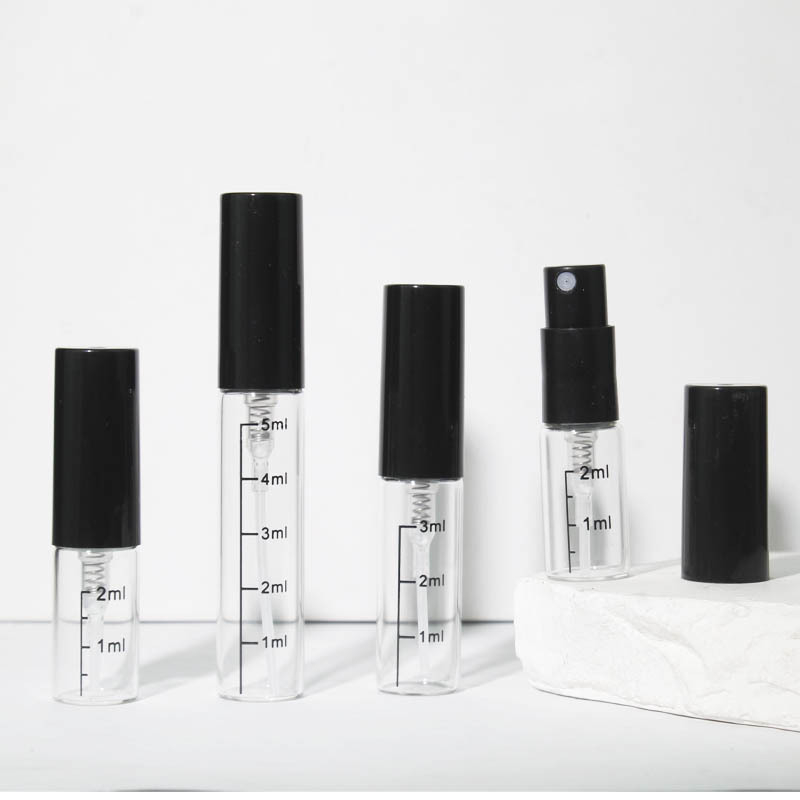
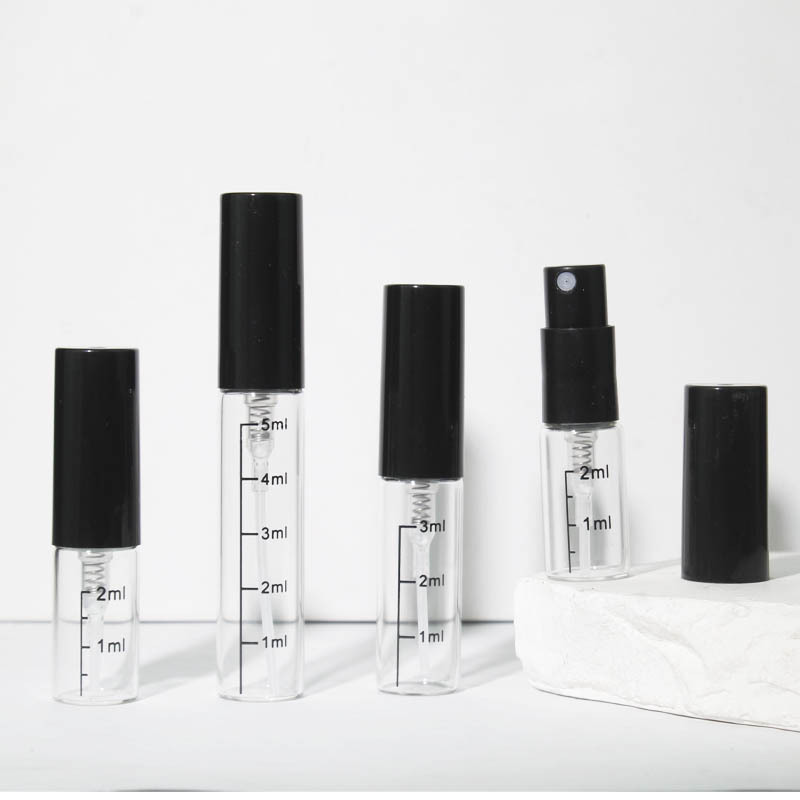

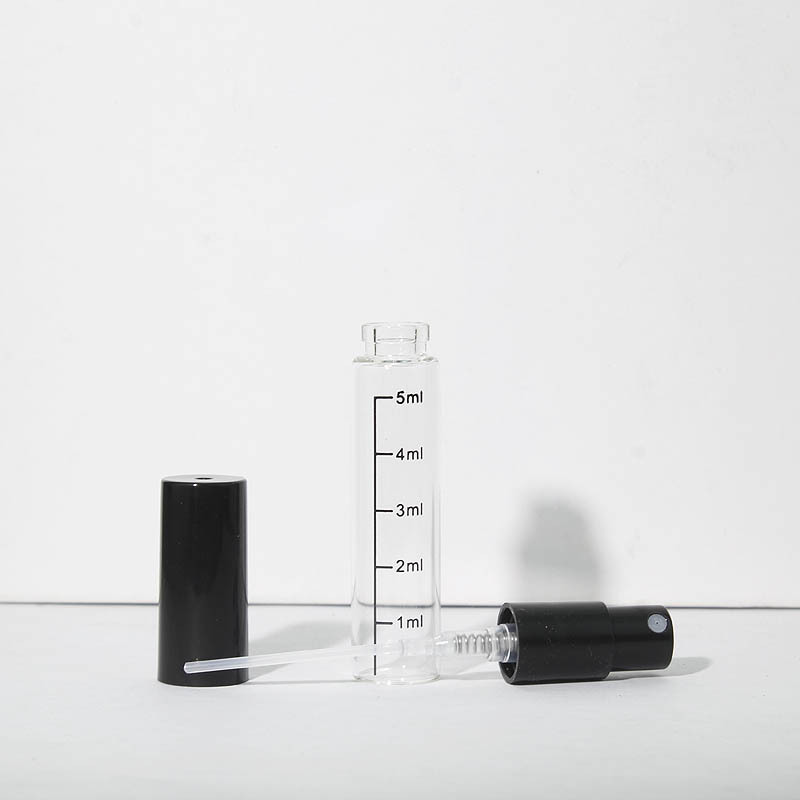

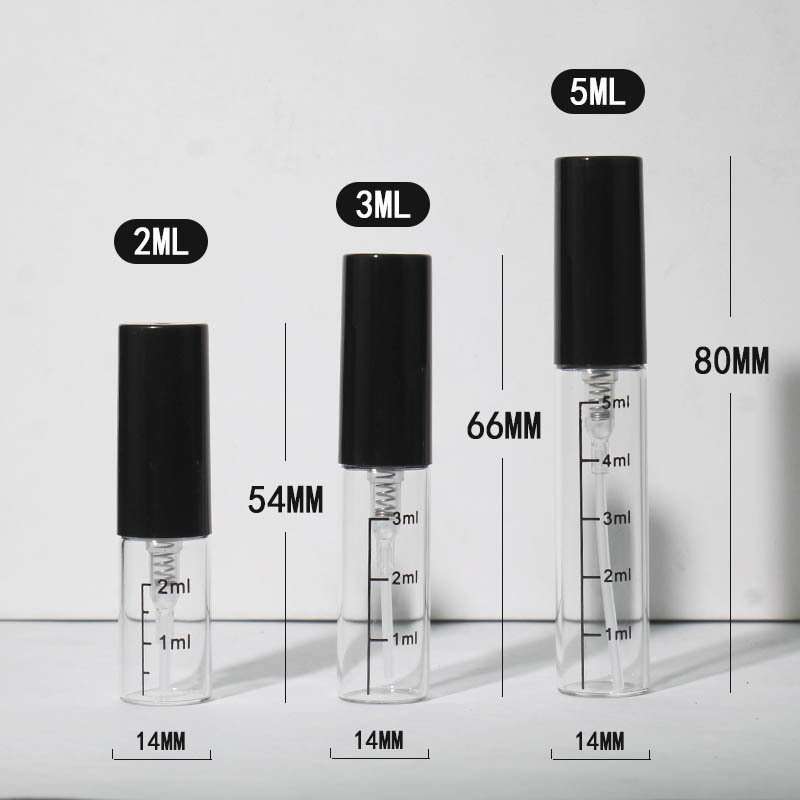



2ml/3ml/5ml Bayonet-Style Graduated Perfume Bottles
Engineered for perfumers and luxury brands demanding precision, CalibraLock Precision Sample Vials redefine sample packaging with scientific-grade functionality. These borosilicate glass bottles (2ml/3ml/5ml) feature laser-etched volumetric graduations (0.1ml increments) for formulation accuracy, paired with a patented bayonet locking mechanism that secures closures in 90° rotation—eliminating cross-threading risks while reducing sealing time by 70% versus screw caps. The pharmaceutical-grade amber glass (Fe₂O₃ ≤0.07%) blocks 95% UV radiation (290-400nm) to prevent photo-oxidation of top notes, while the hexagonal base prevents rolling during lab use. Integrated with a PTFE-lined dropper insert, these vials ensure contamination-free transfer of undiluted absolutes, ethanol-based perfumes, and oil blends.
Packaging Solution
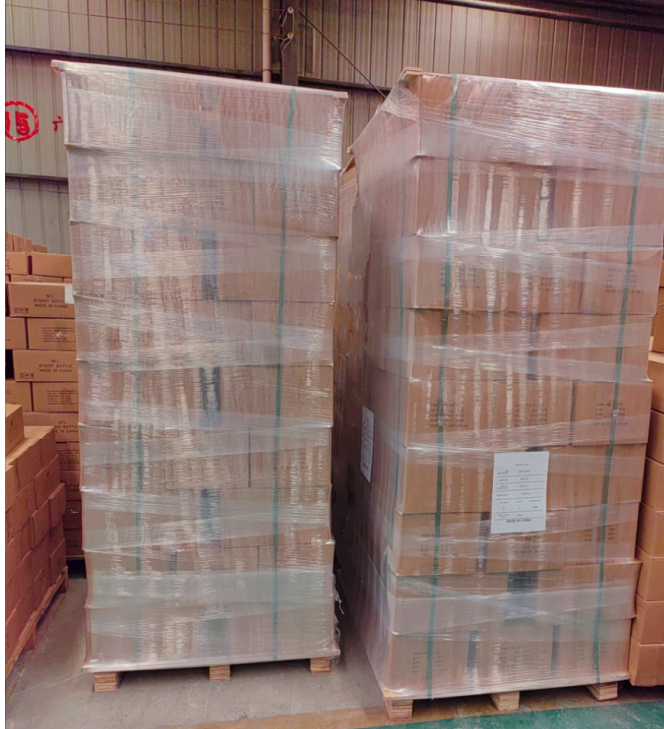
Pallet + Cartons
→ Retail-ready | Weatherproof | Tamper-evident
FAQ
1.How does the bayonet mechanism outperform screw caps for volatile organic compounds (VOCs) in perfume samples?
The bayonet’s cam-action design creates instantaneous axial compression of the PTFE liner against the glass finish, achieving a hermetic seal within 0.3 seconds—critical for preventing VOC evaporation during frequent access. Independent testing (ASTM D8149) shows bayonet closures reduce ethanol evaporation by 92% versus screw caps after 50 openings, as screw threads create micro-channels for vapor diffusion. The metal-to-glass contact also eliminates plasticizer migration that alters scent profiles in plastic-sealed samples.
2.Why are laser-etched graduations superior to printed markings for essential oil measurement?
Laser etching modifies the glass matrix at 20µm depth, creating permanent markings resistant to essential oil solvents (e.g., limonene) that dissolve printed inks within weeks. The process maintains optical clarity without microfractures, whereas surface printing increases friction during pipetting. Crucially, etching precision (±0.5% volumetric accuracy) complies with ISO 4787 laboratory standards, enabling formulation error margins below 0.01ml—impossible with silk-screened lines that wear at ±5% tolerance.
3.Can these vials maintain integrity with concentrated citrus oils known to degrade seals?
Yes. The PTFE liner is molecularly stabilized against terpene penetration through cryogenic treatment (-196°C), reducing pore size to 0.02µm—smaller than d-limonene molecules (0.48nm). Accelerated aging tests with 98% orange oil show ≤0.001% weight change in liners after 6 months, while the borosilicate glass resists citric acid corrosion (0.01mg/cm² material loss vs. 0.12mg in soda-lime glass per ISO 695).
4.How does the hexagonal base enhance functionality in industrial settings versus round designs?
The flat facets prevent rolling on conveyor belts (reducing breakage by 40%), enable robotic gripper compatibility via 12.5mm parallel surfaces, and provide anti-slip stability during pipetting. The geometry also optimizes storage density, allowing 35% more vials per square foot in refrigerated formulations—critical for high-value raw material samples requiring space-efficient cold chain management.