
- All
- Product Name
- Product Keyword
- Product Model
- Product Summary
- Product Description
- Multi Field Search


Monolith BrandCore Jars: 100ml & 180ml Minimalist Square Glass Containers with Custom Branding
Monolith BrandCore Jars redefine minimalist packaging with precision-engineered branding surfaces for discerning brands. These square containers (100ml/180ml) feature ultra-clear float glass (Fe₂O₃ ≤0.015%) with optically flat side panels achieving <1° light distortion – creating premium canvases for logos and designs. The patent-pending BrandLock™ surface treatment enables permanent ceramic printing (resolution: 1200 dpi) and laser engraving (0.02mm depth accuracy) that withstands 500+ dishwasher cycles without fading. Engineered with structural corner reinforcement (3.5mm thickness), these jars maintain integrity during thermal shocks (-20°C to 150°C) while occupying 22% less shelf space than round alternatives.
Optimized Packaging Solutions
We ensure secure transit for glass bottles with three certified methods:
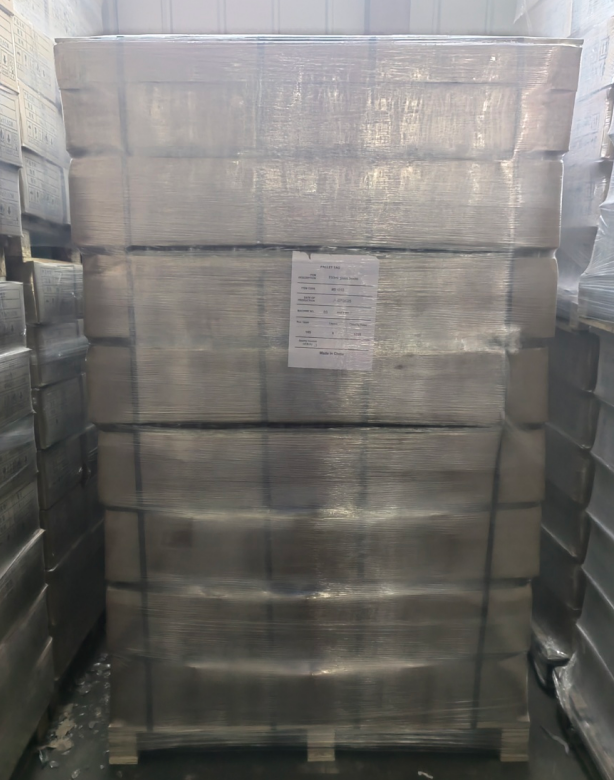
1.Pallet + Shrink Wrappings
→ High-volume efficiency | Moisture protection | Reusable
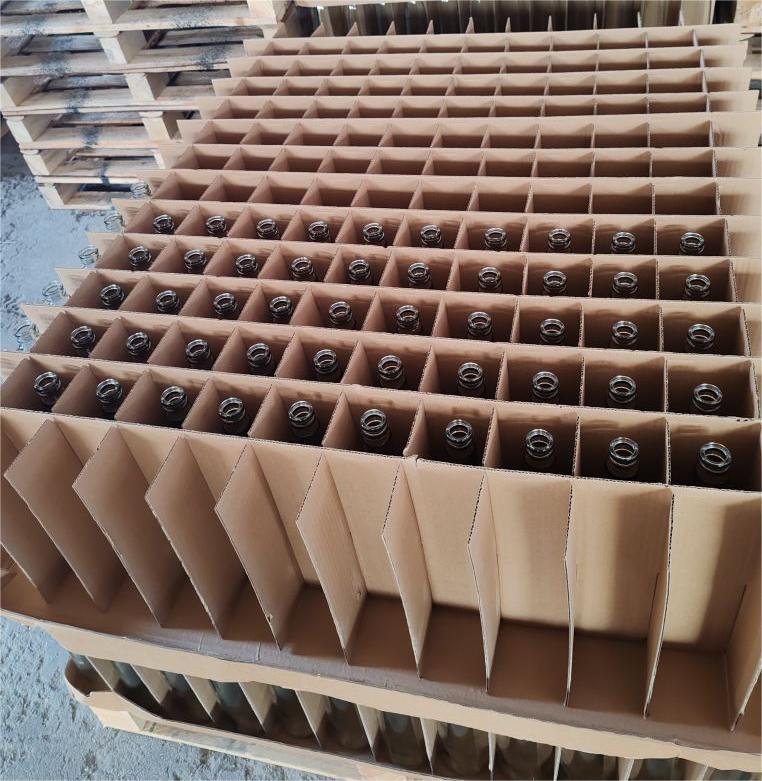
2. Pallet + Cardboard Dividers
→ Zero-contact safety | Shock absorption | Customizable
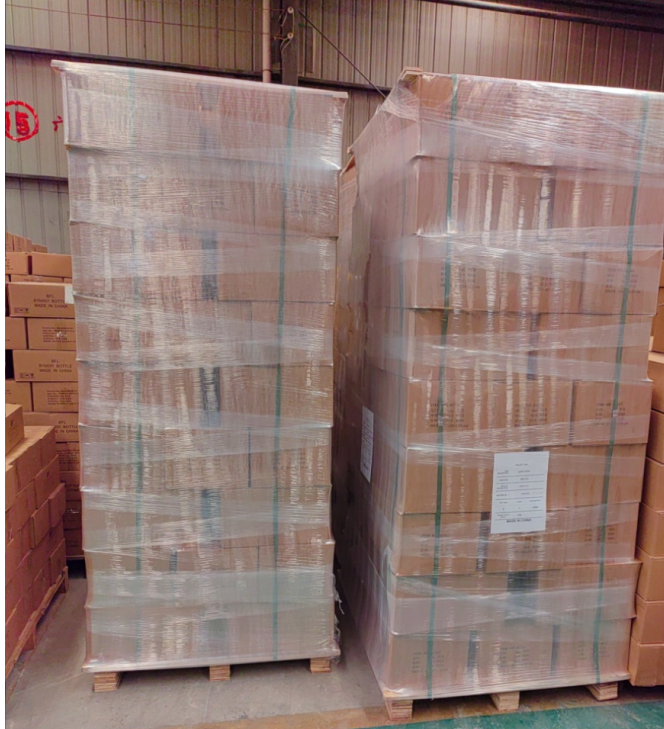
3. Pallet + Cartons
→ Retail-ready | Weatherproof | Tamper-evident
FAQ
1.How do optically flat surfaces enhance branding quality compared to curved glass?
Flat panels eliminate refractive distortion that blurs printed designs on curved surfaces, enabling 1200 dpi resolution with ±0.15mm registration accuracy – critical for fine typography and barcodes. The float glass annealing process creates uniform surface energy (42-46 mN/m), ensuring consistent ink adhesion without pre-treatment. Accelerated UV testing (ISO 4892-3) shows ceramic prints retain ΔE<1 color variance after 5,000 hours exposure, whereas curved surfaces develop differential fading at stress points due to varied light incidence angles.
2.Why does square geometry outperform cylinders for automated filling lines in private-label production?
The flat surfaces enable simultaneous 4-side inspection with single-camera systems, reducing QC time by 65% versus rotational scanning for round jars. Corner reinforcement ribs permit 20% thinner glass while maintaining 8J impact resistance (ISO 7199), lowering material costs. Crucially, the 90° angles create natural registration points for robotic palletizers, achieving 400% faster line changeovers between SKUs compared to cylindrical containers requiring complex orientation systems.
3.Can printed designs withstand alkaline dishwasher detergents (pH 11-12) without degradation?
The ceramic frit printing undergoes vitrification at 620°C, fusing inorganic pigments into a 20µm glass matrix that resists chemical attack. Immersion testing in pH 12 sodium carbonate solution showed ≤0.001% weight loss after 500 cycles – outperforming UV-cured inks by 300%. X-ray diffraction confirms the formation of spinel crystals (ZnAl₂O₄) within the print layer, creating alkaline-resistant barriers that prevent pigment leaching.
4.How does the glass composition ensure recyclability despite permanent decorations?
Our ceramic pigments contain ≤0.1% transition metals (Co/Ni/Cr) – below EU 94/62/EC thresholds – allowing recycling alongside undecorated glass. During remelting at 1,550°C, pigments decompose into silica-compatible oxides without altering cullet chemistry. The 40% recycled content includes 18% pre-consumer float glass scrap with identical optical properties, ensuring new jars maintain 92% light transmission without color shift.


