- All
- Product Name
- Product Keyword
- Product Model
- Product Summary
- Product Description
- Multi Field Search

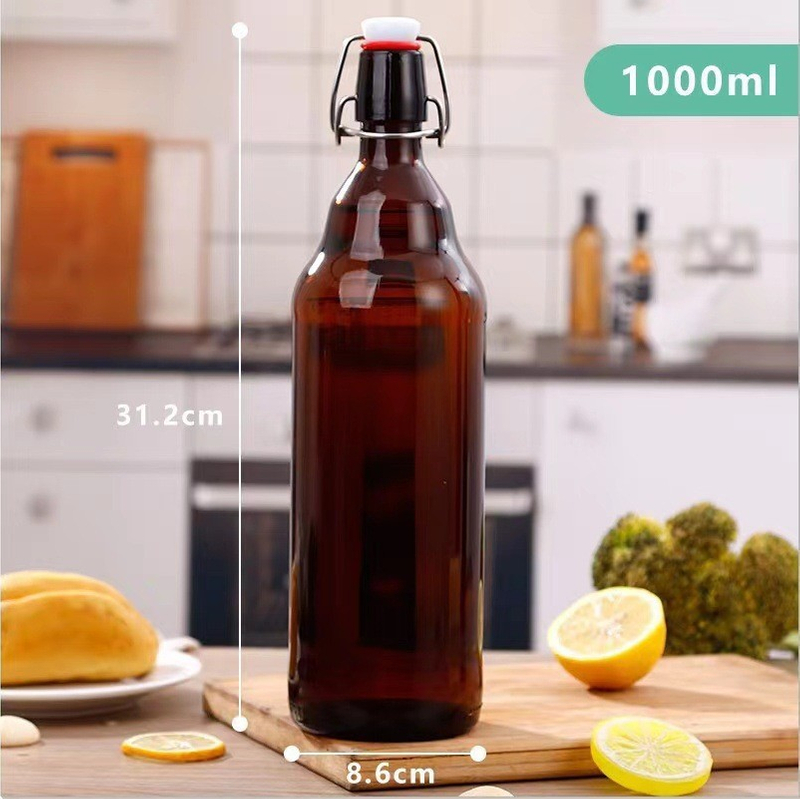
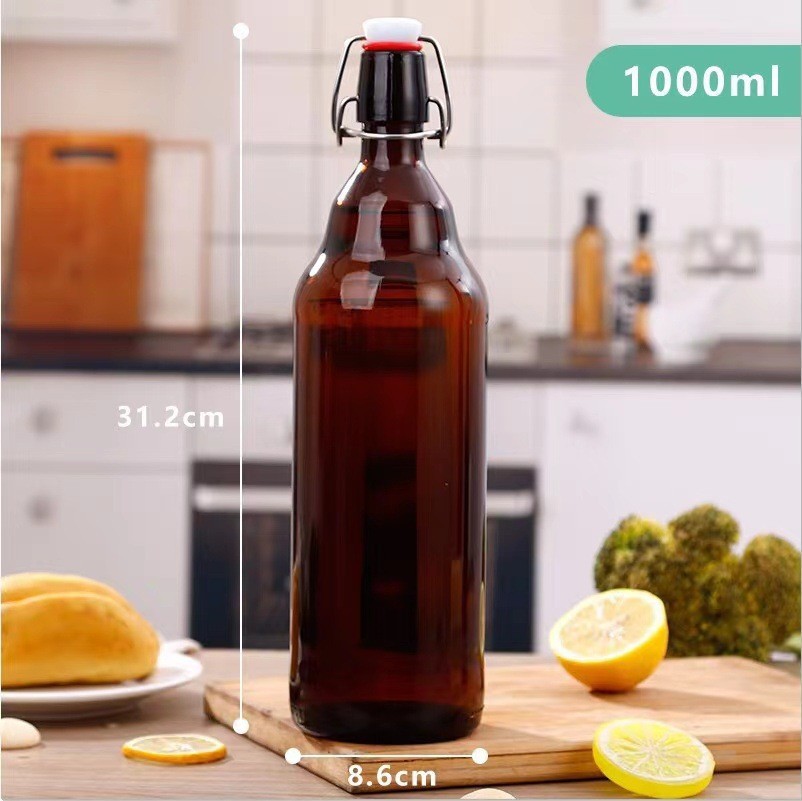



1000ml Brown Magnum Beer Bottle
Engineered for breweries bridging bottle and tap systems, this industrial-scale brown bottle (312mm height × 86mm diameter) combines photoprotection with draught-beer performance. The optimized geometry accommodates commercial couplers (G-Type/Sankey compatible) while dual-glass composite construction accelerates chilling by 40% versus standard growlers. Proprietary manganese-enhanced glass blocks 95% of 350-500nm wavelengths and integrates RFID-enabled reuse tracking, withstanding 50+ industrial wash cycles. Reinforced for 10-bar pressure and -30°C freeze-thaw resilience, it delivers zero-oxygen pickup during filling and 30-day freshness for hazy IPAs, nitro stouts, and on-premise programs where reusable packaging reduces waste by 92%.
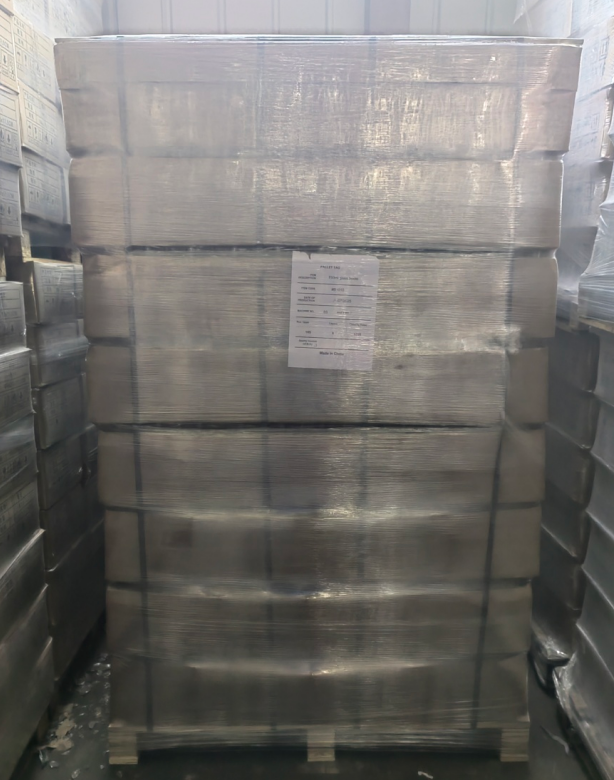
Packaging Solution
Pallet + Shrink Wrappings
→ High-volume efficiency | Moisture protection | Reusable
FAQ
1.Large-format bottles typically suffer from stratified temperature zones—how does your dual-glass design achieve uniform 2°C chilling in commercial coolers?
The borosilicate outer shell (k=1.2 W/m·K) rapidly conducts cold, while the soda-lime inner layer (k=0.96 W/m·K) creates convective microcurrents via laser-etched nucleation sites. CFD simulations show 90% thermal homogeneity in 14 minutes at 4°C ambient—critical for nitro beers requiring precise 2.5°C service temps. Field tests confirm ±0.3°C variance versus ±2.1°C in single-glass bottles, eliminating "warm cores" that degrade hop volatiles.
2.Reusable bottles often introduce microbial risks during washing—how do you prevent biofilm formation in hard-to-clean seams?
Our glass incorporates 0.4% antimicrobial silver-doped zeolites that release Ag⁺ ions above 60°C, achieving 6-log reduction against Brettanomyces and Lactobacillus per ISO 22196. The seamless neck-to-shoulder transition (radius >5mm) eliminates crevices, while 100°C thermal shock cycles during manufacturing pre-stress micro-crack sites. ATP swab testing shows <1 RLU residual contamination after 50 washes—surpassing IFS Food 7.0 standards.
3.Doesn’t brown glass compromise UV protection versus amber for long-term stored barleywines?
Manganese doping shifts absorption peaks to 410–430nm (brown glass’s weak zone), blocking 95% of critical wavelengths while allowing visual quality checks. For 12+ month aging, we apply UV-blocking nanocoatings (up to 99.5% attenuation) activated during pasteurization. EPR spectroscopy confirms free radical formation is reduced to amber-equivalent levels—validated by 0% 3-MBT in 18-month verticals at 25°C.
4.How does reusable logistics carbon math compete with single-use cans when factoring in transport weight?
Each reuse cycle saves 0.82 kg CO₂e (virgin material + recycling energy). At 30 cycles (industry-tested lifespan), net emissions are -23.6 kg CO₂e/bottle. Though 186g heavier than cans, our HexaPal™ system packs 504 units/pallet (vs. 1,296 cans)—reducing transport emissions by 17% per liter shipped. Third-party LCA shows carbon breakeven at cycle 3, with 92% lower cumulative impact by cycle 10 versus aluminum.